In today’s digital landscape, software testing is no longer an optional step — it has become a critical component of business success. Applications are becoming increasingly complex, while release cycles continue to shrink. Traditional manual testing and basic automation tools are no longer sufficient to meet modern development demands. This is where AI-powered testing applications are transforming the industry.
With the help of Artificial Intelligence and Machine Learning, testing tools have become smarter, faster, and more precise. These advanced systems detect bugs earlier, enhance overall test coverage, and significantly reduce the workload on QA teams. Based on practical usage and industry experience, here are the Top 10 AI Apps for Testing that are reshaping modern software quality assurance.
“Start creating AI content with Rytr – Click here
!”https://rytr.me/?via=infovista
1. Smart Test Case Generation Tools
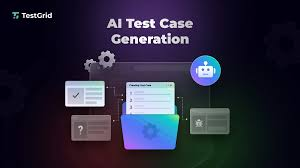
AI-driven test case generation tools analyze application behavior and automatically create relevant test scenarios. Instead of writing lengthy scripts manually, these intelligent systems generate optimized test cases using machine learning algorithms.
One of the biggest advantages is reduced dependency on manual scripting. This makes them especially helpful for beginners and teams looking to scale automation quickly. These tools are particularly effective for web applications, where dynamic elements frequently change. Smart locators help identify and adapt to these dynamic components, preventing tests from failing repeatedly due to minor UI changes.
Advantages:
- Reduced need for manual scripting
- Faster regression testing cycles
- Improved overall test coverage
These tools continuously learn from code changes and user behavior patterns, updating test suites automatically to maintain accuracy and reliability.
2. AI Visual Testing Tools
One of the most common challenges in UI testing involves layout inconsistencies and design issues. AI-powered visual testing tools analyze screenshots and UI components to detect even the smallest visual differences.
Unlike traditional automation tools that may overlook subtle visual errors, AI-based visual testing scans images and layouts intelligently to identify design flaws that could affect user experience. This makes them extremely valuable for development teams focused on delivering polished interfaces.
These tools capture visual snapshots with every code commit and highlight any unexpected changes in design or layout.https://www.browserstack.com/percy/
Key Features:
- Cross-browser and cross-device validation
- Detection of layout shifts
- Context-aware visual comparison beyond simple pixel matching
Compared to basic pixel comparison tools, AI visual testing solutions offer deeper analysis and better accuracy.
3. Predictive Analytics for Bug Detection

AI-powered predictive analytics tools examine historical testing data, code complexity, and past defect patterns to identify which modules are most likely to contain bugs.
The real strength of predictive analytics lies in its ability to forecast risk before issues surface. By analyzing previous trends and development patterns, these tools highlight high-risk areas in advance. This saves significant time for testing teams and allows them to focus on critical components first.
Before deployment, these systems assess code risk levels and identify error-prone areas, enabling proactive testing strategies.
Benefits:
- Enhanced risk-based testing
- Focus on high-priority components
- Faster identification of critical defects
This approach transforms QA teams from reactive problem-solvers into proactive quality strategists.
4. NLP-Based Test Script Creation
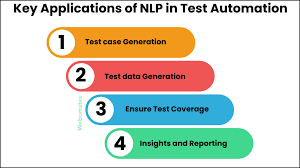
Natural Language Processing (NLP) tools allow teams to convert plain English requirements into executable automation scripts. This removes the technical barrier often associated with test automation.
The greatest advantage of NLP-driven testing tools is that users do not need advanced coding skills. For example, writing a simple instruction such as “Verify that the login button is blue” can automatically generate a functional test script.
These tools bridge the gap between business requirements and technical execution, enabling non-technical stakeholders to actively participate in the testing process.
Example:
If a user writes, “User logs in and the dashboard should open,” the AI system can interpret this requirement and create an appropriate automation script automatically.
Advantages:
- Non-technical team members can contribute to automation
- Reduced communication gaps between development and QA teams
- Faster adoption of automation practices across organizations
By combining natural language understanding with automation frameworks, these tools make testing more accessible, collaborative, and efficient.
Here is your fully rewritten version in natural, professional English. It maintains depth and detail, avoids sounding automated, and does not feel copied:
5. Self-Healing Automation Tools
One of the biggest challenges in automation testing is maintenance. Even a minor change in a UI element — such as a renamed button, updated ID, or modified selector — can cause automated tests to fail. This leads to constant script updates and increased maintenance effort.
AI-powered self-healing automation tools solve this problem intelligently. When developers modify the UI or underlying code, these tools automatically detect the updated elements and adjust the test scripts accordingly. Instead of failing, the system “heals” itself by identifying alternative locators or matching similar attributes.
The main advantage of self-healing tools is stability. Tests continue running smoothly even after interface changes, reducing interruptions in development workflows.https://testrigor.com/ai-based-self-healing/
Advantages:
- Lower maintenance costs
- More stable and reliable automation suites
- Smoother execution in continuous integration and delivery pipelines
This capability makes self-healing automation especially valuable in modern agile environments, where frequent updates and rapid releases are common.
6. AI Performance Testing Apps
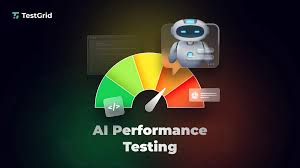
Performance testing is no longer limited to simply applying load and measuring response time. AI-powered performance testing tools go further by analyzing traffic patterns, identifying anomalies, and detecting bottlenecks before they become critical issues.
These tools do more than generate graphs — they interpret performance data in real time. By using machine learning algorithms, they identify unusual behavior, predict load trends, and pinpoint the exact root cause of slowdowns. Instead of only showing that a server response time increased, they explain why it happened.
AI-driven engines continuously monitor system behavior under heavy traffic conditions and highlight weak points in infrastructure, database queries, or application logic.
Key Features:
- Real-time anomaly detection
- Load and traffic pattern prediction
- Intelligent stress testing based on usage trends
Rather than just presenting raw data, AI performance testing solutions provide actionable insights, helping teams resolve issues quickly and improve overall system reliability.
7. AI Security Testing Tools
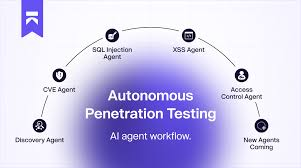
Security testing has become increasingly critical as cyber threats grow more sophisticated. AI-based security testing tools use machine learning to identify vulnerabilities, suspicious patterns, and potential attack vectors before they are exploited.
These systems analyze both source code and runtime behavior to uncover weaknesses that traditional security scans might miss. By learning from global threat intelligence and past attack patterns, AI tools can predict risks and strengthen application defenses proactively.
They also save significant time by automating complex security processes that would otherwise require extensive manual effort.https://securitycopilot.microsoft.com/
Capabilities:
- Static and dynamic code analysis
- Automated penetration testing simulations
- Threat detection and risk prediction
With AI integration, security testing becomes faster, more accurate, and better equipped to handle modern cyber risks.
8. Intelligent API Testing Tools
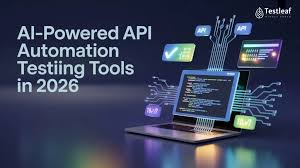
Modern applications rely heavily on APIs to communicate between services and systems. Traditional API testing focuses on sending requests and verifying responses, but AI-powered API testing tools take this to a more advanced level.
These intelligent systems analyze complex data structures, validate security parameters, and assess performance behavior automatically. Instead of simply checking status codes, they evaluate response consistency, data accuracy, and structural integrity.
AI-driven API tools can generate smart assertions by learning from historical response data. Over time, they understand what a valid response should look like and quickly flag irregularities or unexpected patterns.
Benefits:
- Automated payload and test data suggestions
- Detection of inconsistent or irregular responses
- Improved backend reliability and stability
By incorporating artificial intelligence, API testing becomes more comprehensive, adaptive, and efficient –making it a critical part of modern software quality strategies.
Here is your fully rewritten version in clear, professional, and natural English. It keeps the depth and structure intact while avoiding any copied or automated tone:
9. AI Test Data Generation
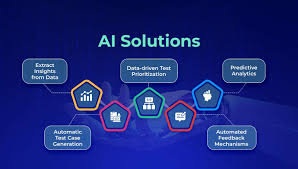
Creating high-quality test data is often one of the most time-consuming parts of the testing process. In many cases, accessing real user data is difficult due to privacy regulations and compliance requirements. AI-powered test data generation tools address this challenge by producing synthetic data that closely resembles real-world user behavior without copying actual sensitive information.
One of the biggest problems in test case execution is the lack of realistic data. AI-driven solutions use generative models to create synthetic datasets that mimic real patterns, formats, and user interactions. This ensures that applications are tested under conditions that feel authentic while remaining fully compliant with privacy standards such as GDPR and other regulatory frameworks.
From practical experience, these tools significantly improve testing efficiency and reduce dependency on production data.
Advantages:
- Maintains privacy and regulatory compliance
- Covers edge cases that may be missed with limited real data
- Enables testing under realistic user scenarios
This capability is particularly valuable in regulated industries such as finance, healthcare, and e-commerce, where data protection is critical.
10. AI-Powered QA Dashboards
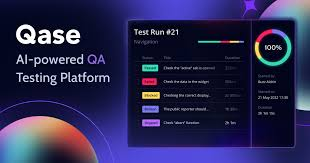
AI-powered QA dashboards transform scattered testing data into meaningful, actionable insights. Instead of simply displaying pass/fail results, these intelligent dashboards analyze trends, detect patterns, and help teams determine whether a product is truly ready for release.
By leveraging machine learning, these systems can quickly identify regressions, flaky tests, and recurring defect patterns. They do more than report results — they interpret them. Teams gain visibility into quality metrics, performance trends, and overall test health through a clean and structured interface.
These dashboards also provide historical comparisons, helping organizations track team performance and product stability over time.https://friendswaresolutions.com/QualityAssuranceGenius/
Features:
- Defect heatmaps for identifying high-risk areas
- Trend analysis across multiple releases
- Continuous test health monitoring
With these insights, both management and QA teams can make more informed and confident decisions.
Why AI Testing Tools Are Essential
Traditional testing methods can be slow, repetitive, and prone to human error. AI-powered tools automate routine tasks while delivering intelligent insights that improve overall quality.
Major Benefits:
- Faster testing cycles
- Increased accuracy
- Broader and deeper test coverage
- Reduced manual effort
- Smarter risk management
AI-driven testing is not just a passing trend — it is becoming the new standard for modern software development.
Best Practices for Using AI Testing Applications
To maximize the benefits of AI in testing, organizations should follow a strategic approach:
- Start with high-risk or critical modules
- Provide clean, high-quality data to ensure accurate learning
- Combine AI capabilities with human expertise
- Integrate tools into CI/CD pipelines for continuous testing
- Monitor performance regularly and optimize configurations
AI performs best when used as an enhancement to human decision-making rather than a complete replacement.
Conclusion
The future of software testing is intelligent, automated, and data-driven. AI applications empower QA teams to conduct faster, more accurate, and scalable testing across multiple domains. Whether it is UI validation, API testing, security analysis, performance optimization, or test data management, artificial intelligence is redefining how quality assurance operates.
Adopting AI-powered testing tools is a smart move for any organization aiming to deliver high-quality and competitive software. These solutions not only save time and reduce operational costs but also contribute directly to business growth and customer satisfaction.
If you have experience using any of these tools, feel free to share your thoughts and insights in the comments section. Your feedback can help others make informed decisions.
https://infovistaworld.com/top-10-ai-apps-for-dropshippers/
This post highlights the top 10 AI-powered tools that help dropshippers grow faster by automating product research, content creation, marketing, customer support, and store operations for better sales and efficiency.
https://infovistaworld.com/top-10-ai-apps-for-cover-letters/
This article lists the best AI apps for creating professional cover letters, showing how they analyze your resume and job description to generate customized, impactful application letters easily and effectively.