Artificial Intelligence (AI) has completely transformed the way software development is carried out. Tasks that were once repetitive and time-consuming, complex algorithm suggestions, and error detection are now streamlined thanks to AI coding tools. Whether you are developing applications, managing large codebases, or exploring new programming languages, today’s AI tools significantly boost productivity while reducing mistakes. Based on personal experience, these tools have been extremely helpful, making complex workflows simpler and more efficient.
This article provides an in-depth review of the 10 best AI coding assistants, examining their strengths, practical applications, limitations, and pricing models. The goal is to help both beginners and professionals understand which tools best fit their development workflow.
“Start creating AI content with Rytr – Click here
!”https://rytr.me/?via=infovista
1. AI Assistants for Code Completion
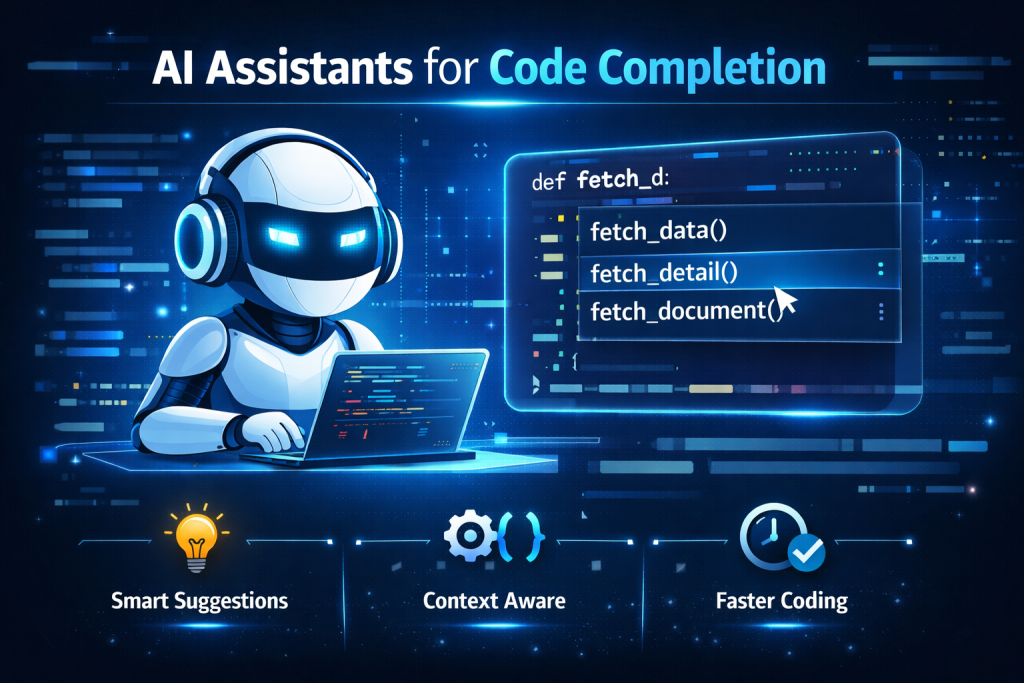
Modern smart code completion engines can predict what a developer intends to type next. Unlike traditional autocomplete features, these tools understand context, recognize patterns, and generate complete code snippets. From my experience, AI-assisted code completion has greatly improved coding speed and accuracy when used correctly, making tasks that once took hours achievable in minutes.
Key Features:
- Contextual suggestions across entire code blocks
- Support for multiple programming languages
- Reduction in typing time and syntax errors
Use Cases:
- Quickly writing repetitive or boilerplate code
- Helping beginners understand coding patterns
- Maintaining focus by reducing distractions
Limitations:
- Occasionally suggests incorrect logic
- Cloud-based tools require internet connectivity
2. AI Debugging and Error Detection Tools
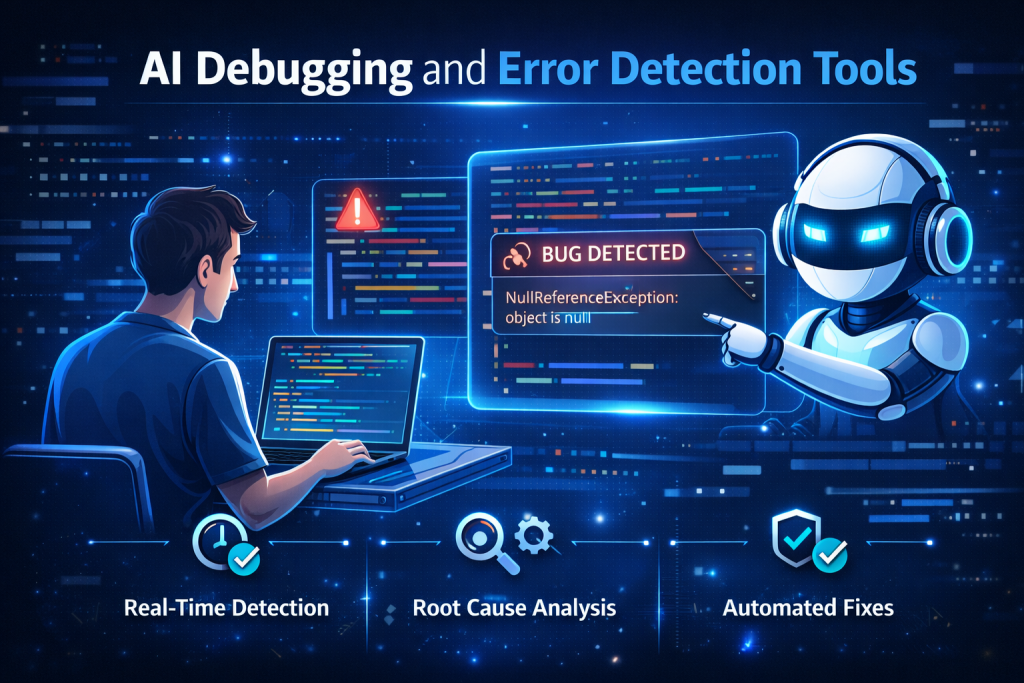
Debugging is one of the most time-intensive aspects of software development. AI-powered debugging tools analyze code in real time, identify potential bugs, and suggest possible fixes. Based on my experience, these tools are invaluable, not just for catching syntax errors but also for detecting complex logical flaws and security vulnerabilities. They provide a faster and more efficient way to handle issues that traditionally required hours of manual inspection.
Key Advantages:
- Real-time error detection
- Explanations of root causes
- Automated test generation to verify fixes
Value:
By detecting bugs early, these tools prevent costly production errors, improving both code reliability and team efficiency.
3. AI-Powered Code Refactoring

Maintaining clean, readable code is essential, especially in collaborative projects. AI-driven refactoring tools automatically restructure and optimize code without altering its functionality. From personal experience, AI refactoring provides a modern solution for restructuring old or complex code, enhancing readability, performance, and overall quality. Tasks that previously required hours can now be completed in seconds, often improving development speed by up to 40%.
Benefits:
- Creates a more readable and organized codebase
- Suggests alternative approaches for logic optimization
- Reduces accumulated technical debt
Ideal For:
- Legacy projects needing modernization
- Teams who want to skip manual cleanup without compromising quality
4. Natural Language-to-Code Converters
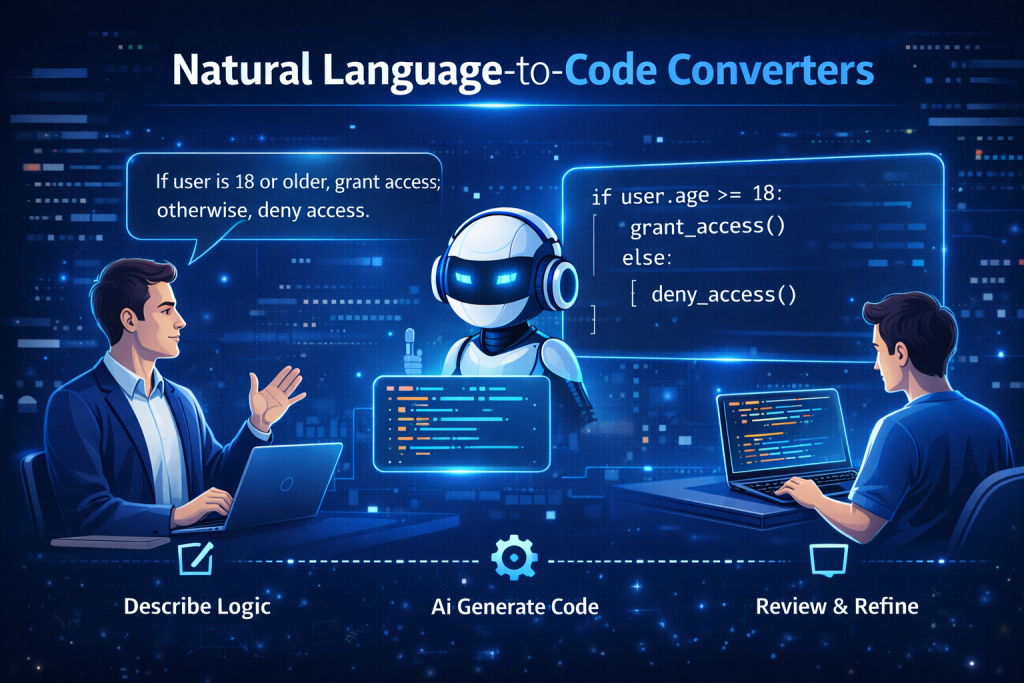
These tools allow developers to describe their ideas in plain English, which the AI then translates into working code. From my experience, natural language-to-code converters are revolutionary for both programmers and non-programmers. They convert simple, human-readable instructions into functional code, often managing everything from environment setup to deployment. For someone who isn’t familiar with programming, these tools are incredibly useful: you simply describe your idea, and the AI handles the implementation. Tools like Replit are excellent examples of this technology in action.
Why It Matters:
- Bridges the gap between idea and implementation
- Enables non-technical team members to define requirements
- Facilitates rapid prototyping and experimentation
Workflow Example:
A product manager describes the desired behavior → AI generates the corresponding code → Developers review and refine it as needed
5. Automated Documentation Creators

Lack of proper documentation often creates onboarding challenges for new team members. AI documentation tools automatically analyze code, generate explanations, describe APIs, and produce usage notes. Based on personal experience, automated documentation tools save countless hours that would otherwise be spent on tedious manual writing. They scan the code and intelligently interpret what each segment does, producing clear and accurate documentation in minutes.https://www.docuwriter.ai/
Key Highlights:
- Improves transparency of code logic
- Reduces manual workload
- Helps new team members learn faster
With AI, documentation becomes an integral part of the code itself rather than an afterthought, ensuring consistency and clarity across projects.
6. Intelligent Testing Assistants
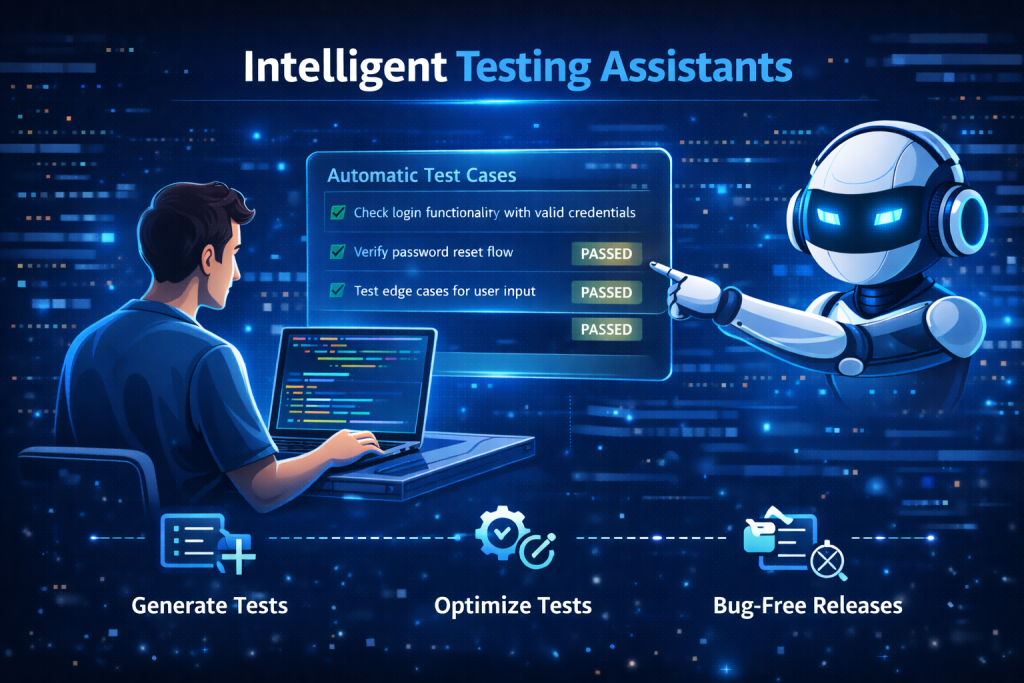
AI tools not only write code but also test it. Intelligent testing assistants generate unit and integration tests, detect edge cases, and even adapt to changing application behavior. From personal experience, these tools automate the most tedious and error-prone aspects of software testing. Some advanced platforms, like Testim, leverage AI to create stable automated tests that self-adjust to UI changes, saving time while ensuring reliable outcomes.
Advantages:
- Provides high test coverage
- Reduces human bias in testing
- Detects potential issues before deployment
Well-tested systems minimize bugs and increase confidence in software reliability.
7. Pair Programming Extensions
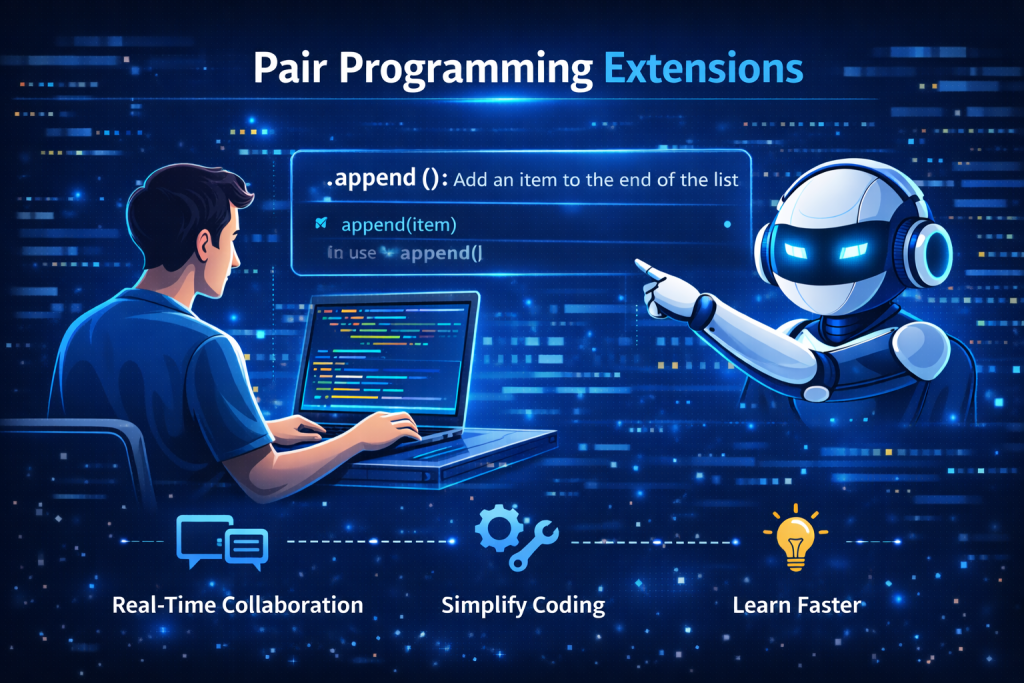
Pair programming extensions act like a virtual collaborator within your development environment. They don’t just write code; they discuss ideas, offer suggestions, and assist with problem-solving. From my experience, these tools work like having a “virtual senior developer” inside your IDE. They not only help you write code faster but also encourage brainstorming and exploring better approaches.
Benefits:
- Encourages more thoughtful and efficient design decisions
- Helps developers learn new patterns and techniques
- Provides instant feedback on coding choices
By combining human reasoning with tool-assisted guidance, these extensions significantly enhance both creativity and code quality.
8. Version Control Assistance Tools
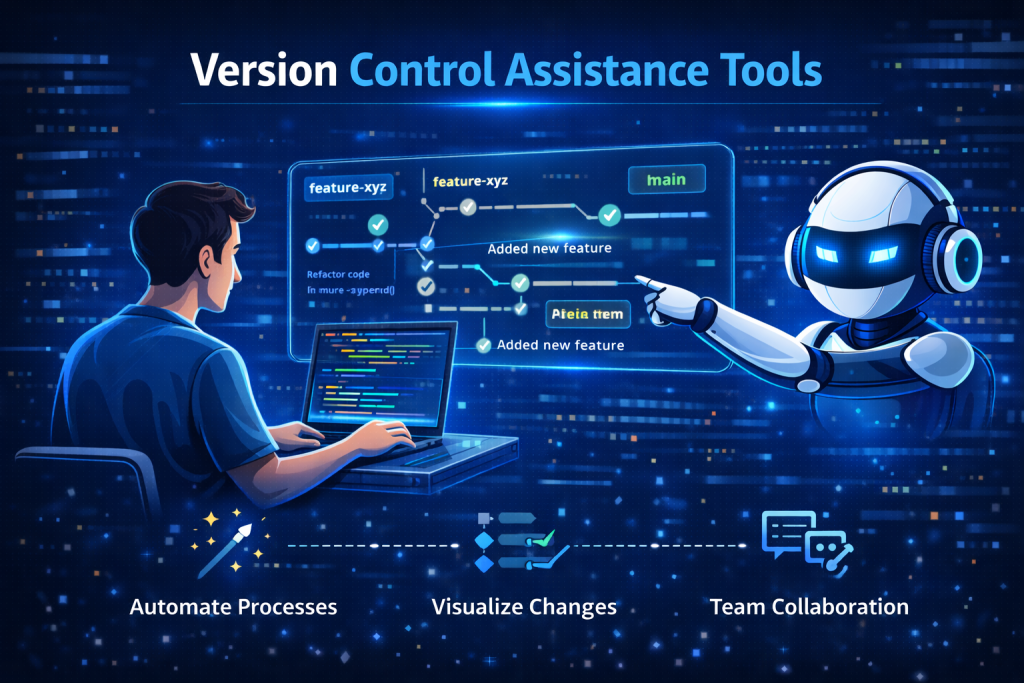
Managing code changes in large projects can quickly become complicated. Version control assistants help simplify Git workflows by resolving merge conflicts, suggesting meaningful commit messages, and tracking changes intelligently. From my experience, these tools reduce errors and make managing pull requests much easier. Many developers also integrate terminal-based Git tools with plugins that allow complex commands to be executed using natural language, which makes workflows more intuitive.
Key Advantages:
- Reduces merge conflicts and errors
- Improves team collaboration
- Maintains a clean, structured commit history
These tools enhance overall DevOps processes, making project management and deployment more efficient.
9. Language Translation and Conversion Tools
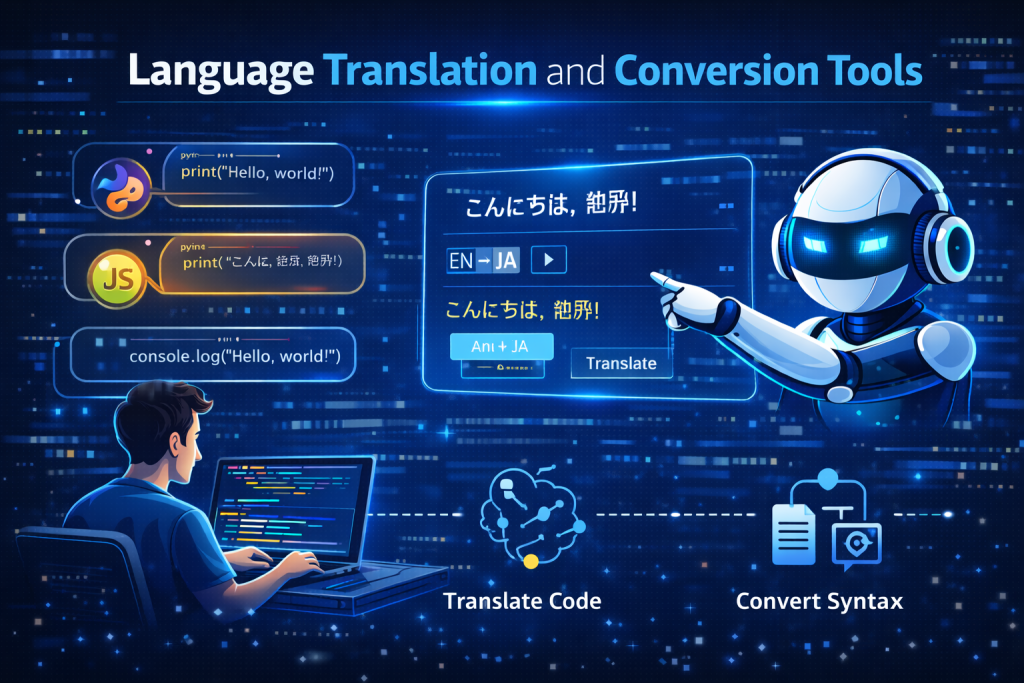
For multinational teams or platform migrations, code translation tools are invaluable. They can convert entire codebases from one programming language to another, for example from Python to Java, while preserving functionality. These tools are also excellent for converting natural language or structured queries into complex SQL commands. From my experience, they save immense time and reduce the risk of errors when rewriting code manually.
Capabilities:
- Converts code snippets between different programming languages
- Maintains logical equivalence across languages
- Suggests best practices for the target environment
By automating translations, these tools minimize manual effort and make cross-platform development far more efficient.
10. Customizable Developer Platforms
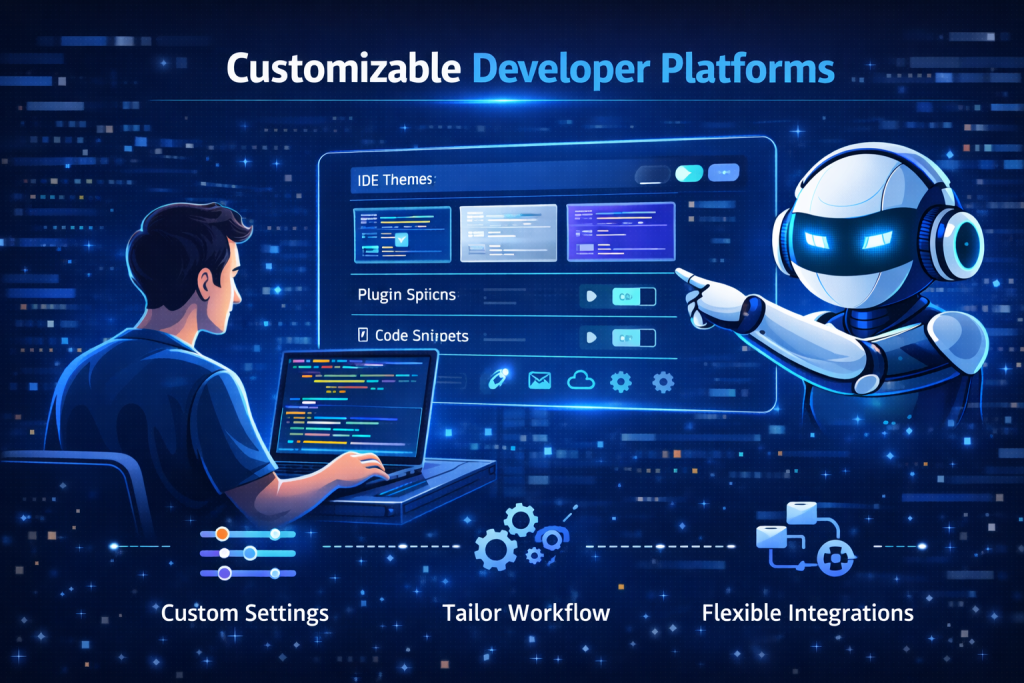
Some platforms allow teams to create fully customized coding assistants tailored to their specific stack, internal libraries, and project requirements. In my personal experience, these tools are extremely useful for adapting assistance to your own coding style and organizational workflows. They deliver highly accurate and relevant outputs because they are trained on proprietary codebases.
Benefits:
- Full control over generated suggestions
- Trained on private codebases for maximum relevance
- Provides outputs aligned with specific project needs
These platforms are particularly valuable for large organizations with specialized workflows, where off-the-shelf tools may not meet specific requirements.
Criteria for Choosing Coding Assistance Tools
When evaluating any development tool, it is important to consider:
- Language Support: How many programming languages and frameworks does it support?
- Integration: Does it integrate smoothly with IDEs, editors, and CI/CD pipelines?
- Accuracy and Context Understanding: Does it understand files, dependencies, and variable relationships?
- Privacy and Security: Does it offer local processing options and maintain enterprise-level data privacy?
- Community and Support: Strong documentation and an active user community can reduce onboarding challenges.
Challenges and Considerations
- Overreliance on generated suggestions can sometimes introduce bugs
- Biases in training data may affect the quality of suggestions
- Human review and validation remain essential to ensure correctness
Future of Coding Tools
These intelligent development tools are expected to evolve beyond just writing code, supporting software design, architecture optimization, and full-cycle project automation. Based on my experience, incorporating them into workflows not only saves significant time but also improves overall quality and efficiency.
These tools have proven extremely useful for me, streamlining repetitive tasks, minimizing errors, and allowing me to focus on creative problem-solving. I encourage readers to share which tools they personally use in the comments section—it’s always insightful to learn from others’ experiences.
I personally recommend Hostinger for beginners because of its affordable pricing and easy setup.
Start here: https://hostinger.com?REFERRALCODE=IWWINFOVISTA
Top 10 AI Apps for Bloggers
Discover powerful AI tools that help bloggers write better, do faster research, optimize SEO, and create visuals with ease. These apps make blogging more efficient and help boost your online engagement.
🔗 https://infovistaworld.com/top-10-ai-apps-for-bloggers/
Top 10 AI Apps for Podcasters
This guide highlights AI applications that simplify podcasting — from recording and editing to transcription and promotion — saving time and improving audio quality for creators at every level.
🔗 https://infovistaworld.com/top-10-ai-apps-for-podcasters/